A & C Driving School
About your driving test
What is the Purpose of Your Driving Test?
- The driving test is designed to establish whether you....
- know the Rules of the Road;
- have the knowledge and skill to drive competently in accordance with those rules;
- drive with due regard for the safety and convenience of other road users.
Preparing for Your Driving Test
You should:
- study the Rules of the Road book carefully;
- seek the assitance of a Registered Driving Instructor(ADI )
- practise driving as much as possible on all types of road and in all types of traffic situations, including driving at night;
- build up your driving experience and confidence before applying for your test.
Special circumstances
You should notify the Driver Testing Section in advance if you:
- have a severe hearing problem;
- are restricted in your movements or have any disability which could affect your driving;
- if you drive an adapted vehicle.
This will eliminate delay on the day of your driving test.
If you cannot speak English or are hearing impaired, you are permitted to have an interpreter with you. This person must not be your driving instructor, and may not accompany you on the practical test.
On the Day of the Driving Test
You should be present in the test centre approx 15 minutes before the appointed time of your test. If you are late the test may not be conducted and the fee will be forfeited.
Whatever you do,
- DO NOT forget your learner permit,
- Make sure it is in date and valid for the vehicle class for which you intend to be tested,
- Do not talk to the tester more than necessary as you want to concentrate completely on what is going on around you.
You will be asked to read and sign a statement confirming that:
- The vehicle insurance cover is in place;
- Your vehicle is in roadworthy condition.
The DrivingTest
The driving test is straight forward. For cars it will last about 40 minutes and will include:
- Questions on the Rules of the Road;
- Road signs;
- Hand signals;
- Right and Left hand turns;
- Turnabout in the road;
- Reverse around a corner;
- Use of roundabouts;
- Hill start;
- Approximately five miles under a variety of road and traffic conditions
Some of the aspects of your driving that will be assessed will include:
- Road positioning and overtaking;
- Observation and use of mirrors
- Your use of signals;
- Your observance of traffic lights, road signs and road markings;
- The correct use of the vehicle controls (accelerator, clutch, gears, brakes and steering)and of the secondary controls such as wipers , de-misters, etc.
Passengers other than the driver tester and / or Department Officers are not permitted to acompany you in the vehicle during the practical test.
Note: A supervisory tester may accompany the tester - this is quite normal.
Click here to See The Driving Test Sheet Explained
Common Faults Contributing to Test Failure
The following are the most common faults which give rise to candidates failing the driving test:
- Inadequate observation moving off, at junctions, at roundabouts and when changing lanes;
- Failure to anticipate the actions of other drivers and reacting appropriately;
- Incorrect road position on the straight, on bends, turning left, turning right, at roundabouts, and when overtaking;
- Inadequate progress at junctions, roundabouts, on the straight, and when overtaking;
- Inadequate use of mirrors and signals;
- Non-compliance with traffic controls, e.g. road signs, road markings and traffic lights;
- Incorrect, inadequate or inappropriate use of vehicle controls, including gears, clutch, accelerator, steering, handbrake, footbrake, and secondary controls;
- Excessive speed for the road or traffic conditions;
- Not yielding right of way to others;
- Not showing competence in the reverse and turnabout manoeuvres.
Your Test Result
If you pass:
You will receive a certificate of competency to drive. This enables you to apply to your local council for a full driving licence. The certificate is valid for two years. You should take out a full licence within that period or you will be obliged to pass the driving test again in order to obtain a full licence.
Remember, passing the driving test is not the end of the learning process; so continue to drive carefully and build up your experience in different traffic, weather, lighting and road conditions.
If you fail:
You will receive a detailed report on the faults which occurred during the test. Pay particular attention to these when preparing for your next test without, of course, neglecting other aspects of your driving.
If you are not happy with the result:
You may appeal to the appropriate District Court under Section 33 of the Road Traffic Act, 1961. The District Court may either refuse the appeal or if satisfied that the test was not properly conducted, direct that the applicant be given a further test without payment of another fee.
Requirements / limitations on your driving with a provisional licence:
Accompaniment:
You are required to be accompanied by a person holding a full driving licence for the category of vehicle being driven. The only exceptions to this are when:
driving a work vehicle, e.g. agricultural tractor; a motorcycle; hold a current certificate of competency to drive for the category of vehicle being driven.
Certain provisionally licensed motorcyclists should check carefully their entitlement to drive machines with an engine power output above 11kw. or 25kw. as the case may be or with a power/weight ratio above 0.16kw./kg.
"L" Plates:
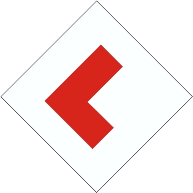
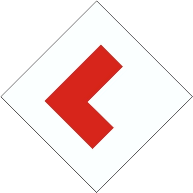
Your vehicle(unless it is a work vehicle or motorcycle)must display an "L" plate on the front and rear. The plate should be a red "L" on a white background.
Motorways:
You may not drive on a motorway while in possesion of a learners permit even if you possess a certificate of competency.
Trailer:
If you are provisionally licensed to drive vehicles of categories B, C1, C, D1 or D you may not drive any such vehicle when drawing a trailer.
Carrying a Passenger:
You may not carry for reward any passenger; if a motorcyclist, you may not carry a pillion passenger; if driving a category "W" vehicle (e.g. work vehicle and land tractor), you may not carry a passenger, unless the vehicle is constructed to carry a passenger and the passenger holds a full driving licence for category W.
Further Learner Permits:
Eligibility for a third or subsequent Learner Permit for any category of vehicle is dependent on you having undergone a driving test within the previous two years or providing medical evidence for not having undertaken it or providing evidence of a forthcoming driving test appointment in respect of the vehicle category in question. In the case of the latter, when applying for a driving test, applicants should submit a written request from their local Motor Taxation Office indicating the need for an early driving test appointment. If you have any doubt about your eligibility for a Provisional Licence you should enquire immediately with your local Motor Taxation Office. The telephone numbers of Motor Taxation Offices can be located under the "Local Authorities" heading of the Telephone Directory"